



SGPT Test (Serum Glutamate Pyruvate Transaminase Test)
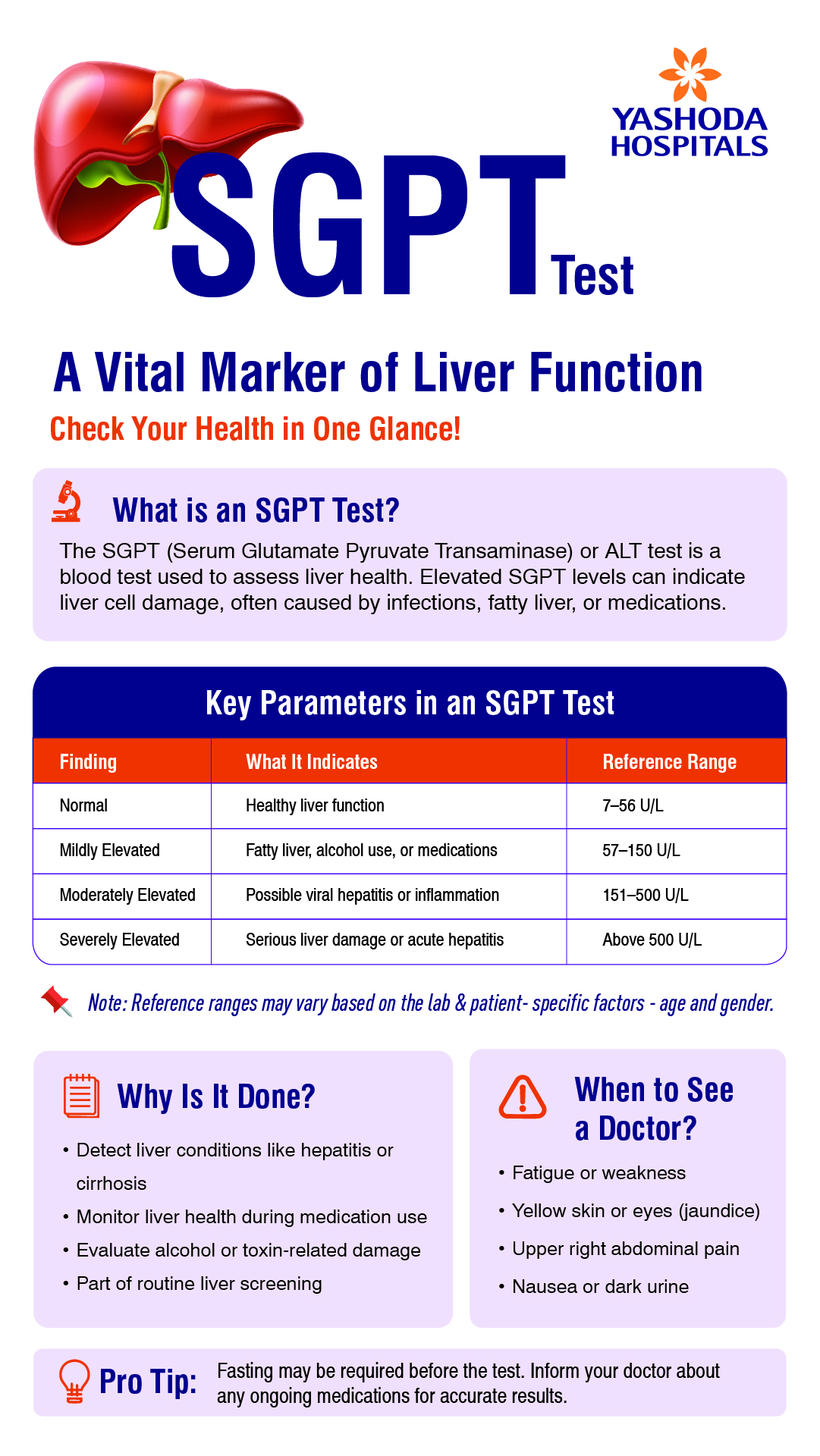
The SGPT test, or Serum glutamate pyruvate transaminase test, calculates the level of an enzyme called alanine aminotransferase (ALT) in the blood. This enzyme is mainly found in liver cells and exhibits a vital role in converting proteins into energy for the body. When liver cells are damaged or inflamed, SGPT is released into the blood, which makes it a vital indicator for evaluating the health of the liver. The SGPT test is also a part of regular health checkups and liver function evaluations, aiding doctors in examining how the liver is performing and detecting early signs of disease before symptoms appear. Unusual levels of SGPT might specify liver injury, problems in the bile duct, or even conditions affecting other organs. A slight increase in SGPT levels can be caused by temporary issues, while significantly higher levels might indicate serious liver issues requiring further investigation. The capacity of the SGPT test to diagnose liver diseases early makes it an important part of preventive healthcare and timely medical intervention, helping in decreasing the risk of long-term issues.
Uses of SGPT Test
The SGPT test is used to calculate the level of alanine aminotransferase (ALT) enzyme in the blood, helps evaluate overall liver functionality and health, and diagnoses the damage to liver cells at an early stage.
It also helps in diagnosing liver diseases like hepatitis, fatty liver disease, liver cirrhosis, liver cancer, alcoholic liver disease, drug-induced injury to the liver, autoimmune hepatitis, bile duct disease, Wilson’s disease, and hemochromatosis.
Though the SGPT test is mainly associated with liver health, it can also provide useful clues about many non-liver conditions due to its presence in small amounts in those tissues. The conditions are muscle disorders or injury, heart issues, metabolic diseases, obesity related issues, thyroid diseases, celiac diseases, kidney diseases, and hemolysis.
Note: Even though SGPT levels can increase in these conditions, it is not a specific evaluatory test for them. Instead, it acts as a supportive indicator, and further evaluations are normally required to confirm the exact cause.
Indications Of SGPT Test
When signs of liver issues like jaundice, tiredness, nausea, vomiting, or abdominal pain are present.
If the doctor suspects liver disease or infection, such as hepatitis, in individuals with a history of excessive alcohol consumption.
If the patient has been using medicines for a long time, that may affect the liver, or when other liver tests show abnormal outcomes.
Before major surgeries, to evaluate the functionality of the liver, and in people with risk factors like obesity, diabetes, or metabolic disorders, and in individuals who are exposed to viral infections that affect the liver.
Preparation Before SGPT Test
Genuine preparation for an SGPT (ALT) test assists in ensuring precise and reliable outcomes. Even though it is a simple blood evaluation, certain precautions can minimize temporary fluctuations in levels of the enzyme.
- Fasting Requirements: In most cases, before the SGPT test, doctors might suggest that the patient fast for 8-12 hours, usually if the SGPT is one of the liver function test panel. Drinking water is normally allowed during this period.
- Avoid Alcohol Consumption: The patient should avoid alcohol, as it can increase the levels of liver enzymes in the short term. It is therefore advised to completely avoid alcohol for at least 24-48 hours before the SGPT evaluation.
- Medication Review: The patient should inform the doctor beforehand about all medicines, supplements, or herbal products they are taking. Drugs like antibiotics, painkillers, or statins might affect SGPT levels, and the doctor may then advise temporary adjustments if needed.
- Restricting Strenuous Physical Activity: Heavy exercise or heavy workouts can elevate enzyme levels due to strain on the muscles. So the patient is advised to avoid strenuous activity for 24 hours before the SGPT test.
- Maintaining a Normal Diet (Before Fasting): The patient should avoid consuming an increased amount of fatty or heavy meals the day before the SGPT test, as it might influence the readings of liver enzymes.
- Stay Hydrated: The patients before an SGPT test should drink enough water, as good hydration assists in the collection of the blood sample.
- Avoid Smoking: Smoking just before an SGPT test might influence certain blood parameters, so the individual should avoid smoking for a few hours before an SGPT test.
- Inform About Existing Conditions: The patient should let their doctor know if they are dealing with any underlying conditions like diabetes, thyroid disease, or an infection recently, as this might influence SGPT test outcomes.
- Timing Of The SGPT Test: The patient should try to get the SGPT test done in the morning, especially if it requires fasting to maintain consistency and accuracy.
Procedure Of SGPT Test
The SGPT (ALT) evaluation is a simple and quick blood test, where the procedure is minimally invasive and normally completed within a few minutes.
- Identification of the patient and consent: The healthcare provider confirms the details of the patient and describes the SGPT test. Consent of the patient is obtained before beginning the process.
- Positioning of the patient: The patient is requested to sit or lie down comfortably with the arm extended to allow easy access to a vein.
- Selection of vein: A suitable vein, normally in the inner elbow (antecubital area), is identified for sample blood collection.
- Cleaning the Area: The skin over the selected site is cleaned with an antiseptic solution to prevent the risk of infection.
- Application of the tourniquet: A tourniquet (tight band) is tied around the upper arm to make the veins swell and easier to access.
- Insertion of the needle: A sterile needle is then gently thrust into the vein. The patient may experience a little prick or discomfort.
- Blood sample collection: Blood is drawn into a collection tube, as only a small amount of blood is required for the SGPT test.
- Removal of needle: Once the sample for the SGPT test is collected, the needle is then carefully removed.
- Applying pressure and Bandaging is applied to the site where the needle is inserted, utilizing cotton or gauze to stop bleeding, which is then followed by placing a small bandage.
- Labeling and Transport: The collected blood sample for the SGPT test is properly labeled and then sent to the laboratory for analysis.
- Laboratory Analysis: The blood sample is analyzed to measure SGPT levels using biochemical methods.
- Result generation: Results for the SGPT test are usually available within a few hours to a day, depending on the laboratory.
Benefits of SGPT Test:
The benefits of the SGPT test extend beyond a simple diagnostic test, making it very important in preventive and clinical care.
- Early diagnosis of liver damage: SGPT evaluation helps in detecting injury to liver cells at an early stage, even before the symptoms appear, which allows for on-time medical treatment.
- Precise evaluation of liver function: By calculating ALT enzyme levels, the test provides a clear indication of how well the liver is functioning.
- Detecting liver diseases: The SGPT test helps in detecting diseases like hepatitis, fatty liver disease, and liver cirrhosis, aiding early identification and management.
- Observing Disease Progression: For patients with existing liver diseases, SGPT helps hepatologists to keep track of whether the condition is improving, is stable, or getting worse over time.
- Examining the effectiveness of the treatment: Doctors utilize SGPT levels to evaluate how well medicines or other treatments are performing and make necessary adjustments accordingly.
- Diagnosis of Drug or Alcohol-Induced Damage: The SGPT test can reveal liver injury caused by long-term medication use or excessive alcohol consumption.
- Regular Health Screening Tool: The SGPT evaluation is commonly included in liver evaluations during regular checkups, assisting in diagnosing silent or asymptomatic liver issues.
- Guides Further Investigations: unusual outcomes during SGPT prompt additional evaluations of underlying diseases.
- Simple, Quick, and Minimally Invasive: SGPT needs only a small blood sample, which makes it safe, convenient, and widely accessible.
- Supports preventive healthcare: Regular observation assists in adopting early lifestyle changes, decreasing the risk of severe liver issues.
Factors Influencing Test Results of the SGPT Test:
Many internal and external factors can affect the results of an SGPT evaluation, occasionally resulting in a short-term rise or variation that might not always indicate a serious liver issue. These factors can affect liver enzyme levels by causing inflammation, stress on the liver, or small changes in metabolism. Understanding them is vital to make sure accurate explanation of test outcomes and to avoid misdiagnosis.
- Medicines, for example, painkillers, antibiotics, and statins.
- If the patient consumes alcohol just before or 1 or 2 days before the test.
- Underlying liver issues like hepatitis, fatty liver, and liver cirrhosis.
- Obesity and metabolic conditions.
- Intense physical activity or muscle injury
- Unhealthy or high-fat diet
- Recent infections, mainly viral infections
- Pregnancy and hormonal changes
- Lab result variations and testing methods
- Fasting or non-fasting status
Types of SGPT Test
SGPT evaluations are usually categorized based on how it is performed and the purpose it serves. While the core test remains the same, different approaches are utilized in clinical tests for better examination and observation.
- Standard SGPT (ALT) Test: Calculates the levels of the enzyme alanine aminotransferase in the blood to evaluate the health of the liver.
- Liver Function Test (LFT) Panel: Includes SGPT along with other proteins and enzymes to create a complete picture of liver function.
- Routine Blood Test SGPT: Is carried out as part of general health check-ups to screen for liver abnormalities.
- SGPT Test as an Observation Tool: is used by doing it repeatedly to track liver diseases or response to treatment over time.
- SGPT Test with SGOT (serum glutamic-oxaloacetic transaminase): Examines SGPT along with SGOT to assist in differentiating various types of liver damage.
- Fasting SGPT Test: Is conducted after fasting to improve the precision of SGPT in some cases
- Non-Fasting SGPT Test: Is done without fasting for routine evaluation.
| Interpretation | Reference/Pattern | Indication |
|---|---|---|
| SGPT Normal | 7–56 U/L | Normal liver function |
| SGPT Mild Elevation | <150 U/L | Mild liver inflammation or Non-alcoholic fatty liver disease (NAFLD) |
| SGPT Moderate Elevation | 150–400 U/L | Active liver inflammation, such as viral hepatitis |
| SGPT Severe Elevation | >400 U/L | Acute liver injury or liver cell damage |
| Isolated SGPT Elevation | Only SGPT elevated | Early liver disease |
| SGPT > SGOT | ALT > AST | Non-alcoholic fatty liver disease (NAFLD) |
| SGOT > SGPT | AST > ALT | Alcohol-related liver disease or muscle injury |
| AST/ALT Ratio > 2 | Ratio > 2 | Alcohol-related liver disease |
| AST/ALT Ratio < 1 | Ratio < 1 | Non-alcoholic fatty liver disease (NAFLD) |
| Persistently Elevated SGPT | Elevated on repeated tests | Chronic liver disease |
| Fluctuating SGPT | Variable levels over time | Intermittent liver injury |
| SGPT + Elevated Bilirubin | ALT high + Bilirubin high | Liver dysfunction or jaundice |
| SGPT + Elevated ALP | ALT high + Alkaline phosphatase high | Bile duct obstruction or cholestatic liver disease |
| SGPT + Low Albumin | ALT high + Albumin low | Chronic liver disease |
| SGPT + Prolonged PT/INR | ALT high + PT/INR high | Impaired liver function |
| Very High SGPT with Normal Bilirubin | ALT high with initially normal bilirubin | Early acute liver injury |
| Low SGPT | <7 U/L | Usually not clinically significant |
Side Effects Of SGPT Test
Like any other blood draw procedure, a few minor side effects may occur for the SGPT Test
- Mild pain or discomfort at the injection site.
- Slight bruising or swelling where the needle has been inserted.
- Bleeding at the puncture site.
- Lightheadedness or dizziness during or after the test.
- Risk of infection at the needle site is very rare.
- Formation of a small hematoma (Collection of blood under the skin).
What is the normal range of SGPT/ALT?
SGPT, also known as Alanine Aminotransferase (ALT) Test, has a definite normal range. The range of results considered normal in an SGPT test is between 7 and 56 units per litre. Anything above that means an organ that produces SGPT enzyme is most likely damaged, and treatment needs to be done at the earliest.







 Appointment
 Second Opinion
 Live Chat
 Call
Call More
More


